Salary Guide  ·  Updated 2026

What Automation
Techs Actually Make.

You program the machines the rest of the plant depends on. Here's what that's worth, entry to master.

PLC programming, robotics maintenance, controls — Industry 4.0 runs on people who can troubleshoot a system, not just a machine. This guide breaks down real pay by experience level and what actually moves the number.

$20–26/hr
Entry Level
$32–44/hr
Journeyman
$46–62+/hr
Master / Top End
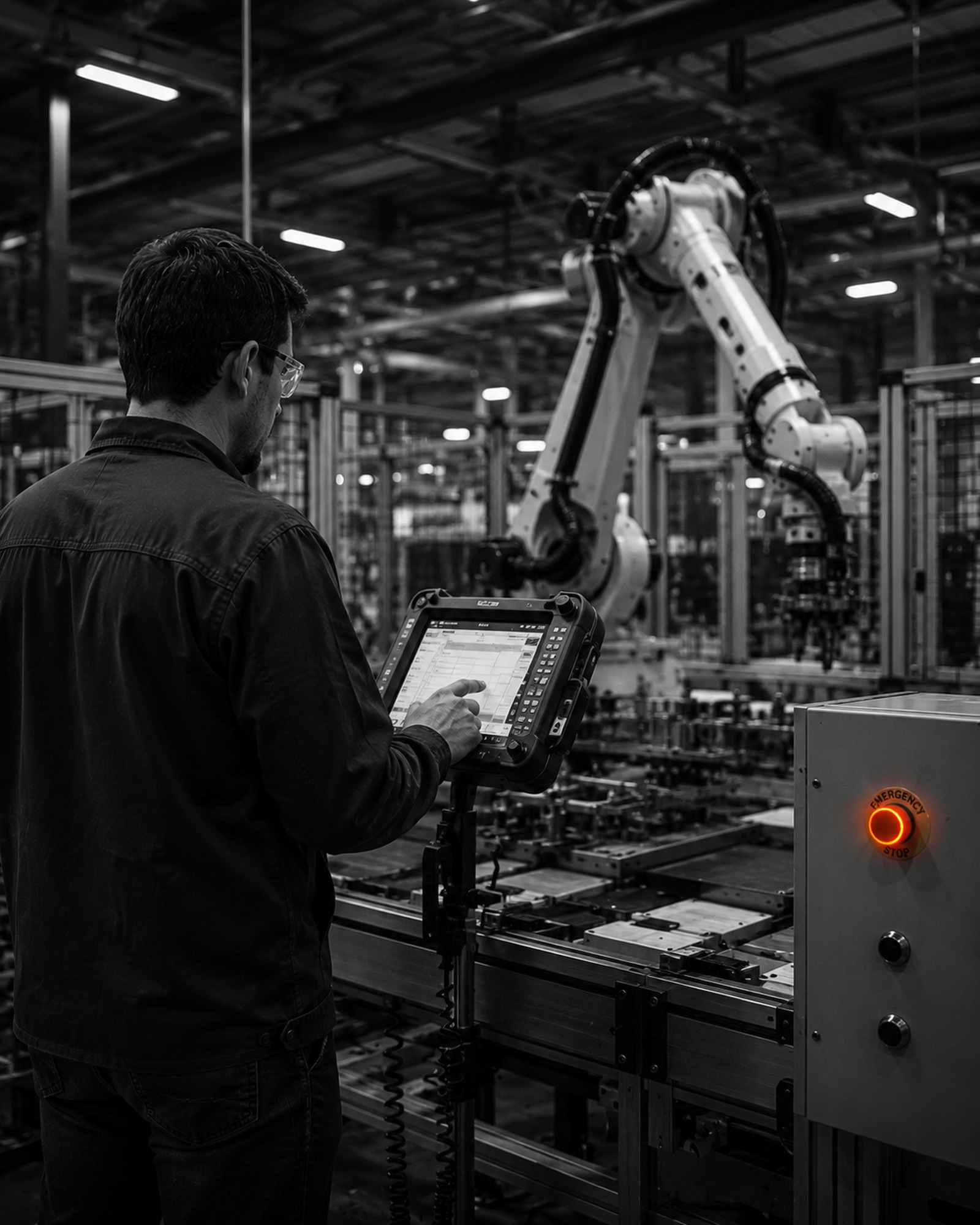
Automation technician programming a robotic arm Automation / Robotics
The Breakdown

Pay By Experience Level

The U.S. Bureau of Labor Statistics tracks the closest official match to this trade under "electro-mechanical and mechatronics technologists and technicians" — that category posted a median annual wage of $70,760 as of May 2024, the most recent BLS OEWS data available. That figure sits roughly in the middle of what you'll see across the field, and it lines up with where journeyman-level automation techs typically land.

Junior / Entry Technician ($20–26/hr, roughly $42,000–$54,000/yr) is where most techs start — usually straight out of a two-year associate program in mechatronics or industrial automation, or transferring in from a machine operator or maintenance tech role. You're learning the plant's specific PLC platform and equipment under a senior tech at this stage.

Controls / Automation Technician ($32–44/hr, roughly $67,000–$91,000/yr) is where independent troubleshooting authority kicks in — diagnosing faults across PLCs, sensors, servo drives, and HMIs without supervision, and often owning commissioning on new equipment installs.

Senior / Lead Specialist ($46–62+/hr, $95,000–$129,000+/yr) covers senior controls techs and specialists — the people plants call when the automated line is down and production is waiting. This tier is dominated by deep platform expertise and certification.
What Moves The Number

Four Things That Actually Raise Your Pay

Industry

Aerospace, semiconductor, and pharmaceutical manufacturing consistently pay above the average for this trade — tighter tolerances, higher stakes, higher pay.

Certification

ISA credentials — the CCST for hands-on instrumentation and controls work, the CAP for process automation at the senior end — are the clearest way to prove skill on paper.

Platform Depth

Deep, provable expertise in Siemens or Allen-Bradley/Rockwell PLCs is one of the few single skills that reliably commands a premium on its own.

Shift & Call-In Structure

Base pay is only part of it. Rotating shifts, overtime, and emergency call-in work for down lines can meaningfully change annual earnings beyond the hourly rate.

On The Job

What The Work Rewards

This guide describes the work editorially rather than using invented worker testimonials. In automation / robotics, pay tends to move with demonstrable experience, harder-to-find skills, job conditions, geography, credentials where relevant, and the amount of responsibility you can take on safely.

Turn Pay Research Into A Next Step

Use the salary guide as context, then choose the path that actually fits you.

I Already Work In Automation / Robotics

Build a role, location, experience and credential profile for possible employer matching.

Get Matched →

I’m Hiring

Send Careers In Trades a structured hiring brief instead of a generic job-board post.

Submit a Hiring Need →
Part Of A Bigger Network

12 More Trades, One Hub

Jobs In Automation is one of 13 trade-specific sites in the Careers In Trades network.

Explore Careers In Trades → Employer Program →